

Types of Microphones for Video: Lavalier, Shotgun, Wireless and USB Explained

Quick Answer
The main types of microphones for video are lavalier (collar) mics, shotgun mics, wireless systems and USB mics. Lavaliers suit talking to camera, shotguns suit vlogging and filming without a visible mic, wireless kits suit movement and interviews, and USB mics suit desk recording. The best choice depends on how far the mic sits from your mouth.
Why Does Your Video Sound Worse Than It Looks?
You shot in 4K, the lighting is good, and the framing is clean. Then you play it back and your voice sounds thin, echoey and far away, with a ceiling fan humming over everything.
This is the most common complaint we hear from new creators. Viewers forgive slightly soft video, but most will leave quickly when the sound is hard to follow.
The cause is almost always the same. The built in microphone on a camera or phone is small, sits far from your mouth, and picks up sound from every direction. An external mic fixes this, but only if you choose the right type for the way you shoot. This guide explains each type in plain language so you can decide with confidence.
What Is the One Rule That Matters Most for Clean Audio?
Distance matters more than price. A modest mic placed close to your mouth will usually sound better than an expensive mic placed two metres away.
Here is the reasoning. Every time you double the distance between your mouth and the mic, the direct sound of your voice drops by roughly 6 decibels. The room noise stays the same. So as the mic moves away, your voice sinks into the echo, the fan, the generator outside and the traffic.
Every microphone type below is really just a different way of solving the distance problem.
What Are the Main Types of Microphones for Video?
There are four types most video creators will choose between. Each one is defined below with its strengths and limits.
What Is a Lavalier Microphone?
A lavalier is a small clip on mic worn on the chest, often called a collar mic or lapel mic. It stays a fixed, short distance from your mouth, so your voice level remains steady even when you turn your head.
Most lavaliers are omnidirectional, which means they pick up sound evenly from all sides. That makes placement forgiving. Clip it about 15 to 20 cm below your chin, in the centre of your chest.
Best for: tutorials, online classes, interviews, talking head videos and Islamic lectures or speeches where the speaker stays in one spot.
Limits: a wired lavalier ties you to the camera, and fabric rubbing against the capsule creates rustling noise.
What Is a Shotgun Microphone?
A shotgun mic is a long, narrow microphone that favours sound from the front and reduces sound from the sides. It usually mounts on the camera’s hot shoe or on a boom pole.
Many people assume a shotgun “zooms in” on distant sound. It does not. It simply rejects more from the sides. It still works best within about a metre of the speaker.
Best for: vlogging at arm’s length, run and gun event coverage, and scenes where no mic should be visible in the frame.
Limits: in small rooms with bare walls, shotguns can sound hollow because reflections arrive from every direction. They perform best outdoors or in furnished rooms.
What Is a Wireless Microphone System?
A wireless system uses a transmitter worn by the speaker and a receiver plugged into the camera or phone. Many compact kits from brands such as Rode, DJI, Hollyland and Boya have a mic built into the transmitter, so you simply clip it on and record.
Most compact kits transmit on the 2.4GHz band, the same band used by WiFi and Bluetooth. They work well in open spaces, but a crowded wedding hall full of phones and routers can cause dropouts. Some models record a backup inside the transmitter, which protects you if the signal breaks.
Best for: walking and talking, two person interviews, wedding vows and speeches, fitness and cooking videos.
Limits: batteries need charging, and range figures on the box assume a clear line of sight between the two units.
What Is a USB Microphone?
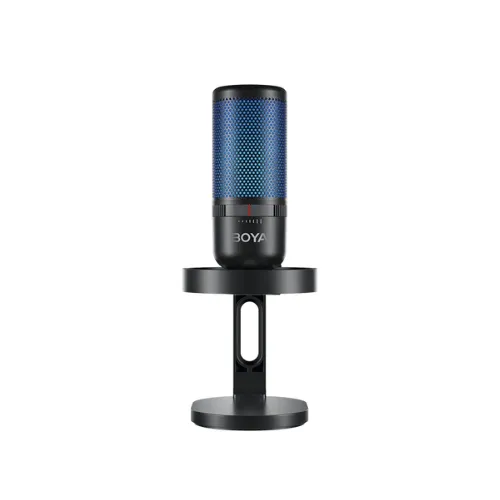
A USB mic plugs straight into a computer or phone and needs no separate audio interface. It is designed for a desk, not for a camera.
Best for: voiceovers, podcasts, gaming streams, online teaching and Zoom calls.
Limits: it must stay close to your mouth and is not practical for filming on location.
Which Microphone Type Suits Your Kind of Video?
Use this table as a quick starting point.
| Type of video | Recommended mic type | Why it works |
|---|---|---|
| Seated tutorial or online class | Wired or wireless lavalier | Constant distance, steady voice level |
| Handheld vlog | Compact shotgun on camera | Nothing to wear, points where the lens points |
| Walking, cooking or fitness video | Wireless system | Freedom to move away from the camera |
| Two person interview | Dual transmitter wireless kit | One mic per speaker, separate levels |
| Wedding speeches and vows | Wireless lavalier plus a camera shotgun as backup | Two sources protect a moment you cannot reshoot |
| Voiceover or podcast | USB mic | Simple setup, close placement |
| Short film dialogue | Shotgun on a boom pole | Mic stays hidden but close to the actor |
Lavalier vs Shotgun vs Wireless: How Do They Compare?
| Factor | Wired lavalier | Camera shotgun | Wireless system |
|---|---|---|---|
| Typical distance from mouth | 15 to 20 cm | 50 cm to 1 m | 15 to 20 cm |
| Handles noisy rooms | Well | Fair | Well |
| Freedom of movement | Low | High | High |
| Visible in frame | Yes, small | No | Yes, small |
| Needs charging | Rarely | Sometimes | Always |
| Relative cost | Lowest | Middle | Highest |
In our opinion, a beginner who mostly talks to the camera gets the biggest improvement per rupee from a simple wired lavalier. A wireless kit is the better long term choice if you move around or film other people.
What Does Polar Pattern Mean?
A polar pattern describes the directions from which a microphone picks up sound. You will see three patterns most often.
- Omnidirectional: hears equally from all sides. Common on lavaliers.
- Cardioid: hears mainly from the front and rejects the rear. Common on USB and podcast mics.
- Supercardioid: a tighter front pickup with strong side rejection. Common on shotgun mics.
Knowing the pattern tells you where to point the mic and where to keep noise sources. Put the fan or the AC unit in the direction the mic rejects.
Will the Microphone Work With Your Camera or Phone?
Check the plug before you buy, because a camera and a phone expect different connectors. This is the mistake that sends the most people back to the shop.
| Connector | Looks like | Used with |
|---|---|---|
| 3.5mm TRS | Two black rings on the plug | Cameras and audio recorders |
| 3.5mm TRRS | Three black rings on the plug | Phones and laptops with a headset jack |
| USB C | Small oval plug | Android phones, newer iPhones, computers |
| Lightning | Flat Apple plug | Older iPhones |
| XLR | Large three pin plug | Professional cameras and recorders |
A TRS mic plugged into a phone’s headset jack often records silence or very low sound. A small TRS to TRRS adapter solves it. Some lavaliers, such as the Boya BY M1, include a switch for camera or smartphone use.
Also check power. Many small mics rely on plug in power, a low voltage supplied by the camera’s mic jack. Professional XLR condenser mics usually need 48V phantom power from the camera or recorder.
How Do You Get Better Sound From Any Microphone?
Follow these steps in order. Most cost nothing.
- Move the mic closer before you touch any setting.
- Switch off fans, AC units and anything that hums while recording.
- Record in a furnished room. Curtains, carpets and sofas absorb echo.
- Set the level manually so your loudest speech peaks near minus 12 dB.
- Fit a foam or furry windshield whenever you film outdoors.
- Wear headphones and listen for a few seconds before every take.
- Record a short test clip and play it back on your phone speaker.
If your wireless kit or recorder offers 32 bit float recording, use it for events. It captures a very wide range of loudness, so sudden shouts or applause are far less likely to distort.
What Mistakes Do Buyers Make When Choosing a Microphone?
- Buying on brand alone. A premium shotgun will not rescue a voice recorded from three metres away.
- Ignoring the connector. TRS and TRRS confusion is the top cause of “the mic is not working.”
- Trusting the range on the box. Walls, crowds and bodies between the units reduce real range.
- Skipping wind protection. Even a light breeze causes rumble on a bare capsule.
- Never monitoring. A loose cable can ruin an entire shoot, and you only find out at home.
- Relying on one source at weddings. Always run a backup recording for speeches and the nikah.
When Is It Worth Hiring a Sound Professional?
For paid commercial shoots, short films with dialogue, and large stage events, a dedicated sound recordist is worth the fee. They manage multiple wireless channels, feed from the venue’s mixer and solve interference on the spot. For everyday content, the right mic type and good placement will take you most of the way.
Key Takeaways
- The four main types of microphones for video are lavalier, shotgun, wireless and USB.
- Mic distance affects quality more than price or brand.
- Lavaliers suit seated speaking, shotguns suit vlogging, wireless suits movement, USB suits desk work.
- Shotgun mics do not zoom. They reject side noise and still need to be close.
- Cameras use TRS plugs and phones use TRRS or USB C. Check before buying.
- Always monitor with headphones and keep a backup recording at important events.
Frequently Asked Questions
Which type of microphone is best for YouTube videos?
For talking to the camera, a lavalier mic is usually the best starting point because it stays close to your mouth and keeps your voice level steady. If you move around or film outdoors, a compact wireless system gives the same close sound with freedom to walk. Vloggers holding the camera often prefer a small shotgun.
Is a lavalier mic better than a shotgun mic?
Neither is better in every case. A lavalier gives cleaner voice in noisy or echoey rooms because it sits about 15 to 20 cm from the mouth. A shotgun sounds more natural and stays out of the frame, but it needs to be within about a metre and works best in quieter spaces.
Can I use a camera microphone with my mobile phone?
Yes, but you often need an adapter. Camera mics use a 3.5mm TRS plug, while phone headset jacks expect TRRS. A TRS to TRRS adapter fixes this. Phones without a headphone jack need a USB C or Lightning adapter, or a mic that has one of those plugs built in.
Do wireless microphones lose connection?
They can. Most compact wireless mics use the 2.4GHz band, which is shared with WiFi and Bluetooth. Crowded halls, thick walls and people standing between the transmitter and receiver can cause dropouts. Keep a clear line of sight where possible and use internal backup recording if your kit offers it.
Why does my video have echo even with an external mic?
Echo comes from sound bouncing off hard walls, floors and ceilings before reaching the mic. An external mic helps only if it is close to your mouth. Move the mic nearer, record in a room with curtains, carpet and soft furniture, and avoid empty rooms with tiled floors and bare walls.
What is the difference between a condenser and a dynamic microphone?
A condenser mic is more sensitive and captures fine detail, which is why most lavalier, shotgun and USB mics use condenser capsules. A dynamic mic is less sensitive and picks up less room noise, so it suits loud environments and untreated rooms. Dynamic mics are popular for podcasts and live vocals.
Do I need a windshield for my microphone?
Yes, for any outdoor recording. Wind hitting a bare capsule creates a low rumble that is very hard to remove in editing. A foam cover handles indoor air movement from fans. A furry cover, often called a deadcat, is the better choice for outdoor breeze, rooftops and moving vehicles.
How close should a microphone be to my mouth?
For a lavalier, clip it about 15 to 20 cm below your chin. For a USB or podcast mic, stay roughly a hand span away. For a shotgun, aim for under one metre. Closer placement gives a stronger voice signal compared with background noise, which is the main factor in clear audio.
Conclusion
Good audio is less about owning the most expensive microphone and more about choosing the right type and keeping it close. Lavaliers give steady voice for seated videos, shotguns keep the mic out of the frame, wireless systems free you to move, and USB mics make desk recording simple. Match the mic to how you shoot, check the connector, and always listen before you record.
FotoTrade has been helping photographers and creators across Pakistan choose gear since 1990. If you are unsure which mic fits your camera or phone, bring your device along and test a few options before you decide. Our team answers calls and WhatsApp messages on 0321 4555316, and you will find the shop at 92 Chamberlain Road, Anarkali Bazaar, Lahore. You can also browse the microphone range online and message us with any compatibility question.